Astronomy 202: Astrophysical Fluid Dynamics
See bcourses.berkeley.edu for the up-to-date version.

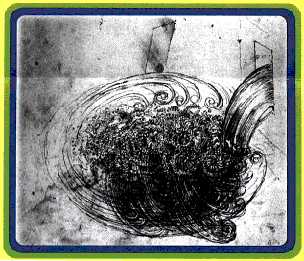

Fluid mechanics for astronomers. The class aims to develop physical intuition and order-of-magnitude problem-solving skills.
Topics
- Mass, Momentum, and Energy Equations
- Drag
- Turbulence and Kolmogorov cascade
- Inviscid Flow and the Bernoulli Constant
- Parker Wind / Bondi–Hoyle Accretion
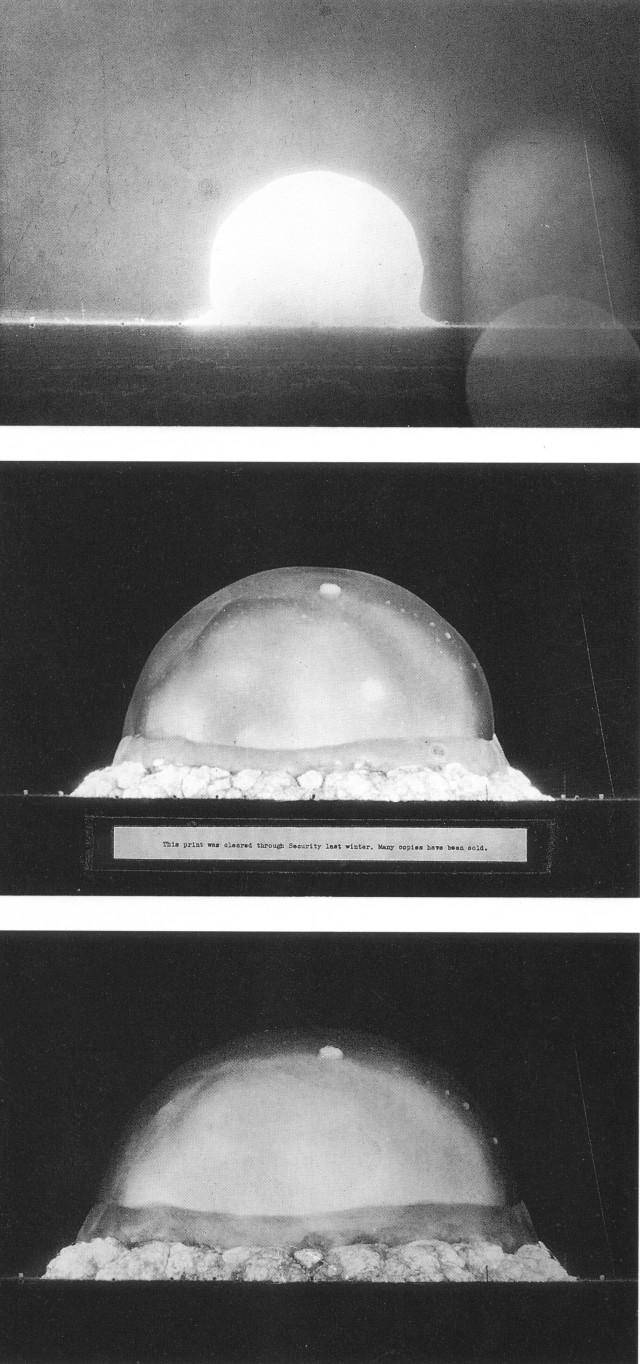
- Sound Waves, Shocks, and Sedov–Taylor
- Convection / Mixing Length Theory
- Kelvin–Helmholtz and Rayleigh–Taylor Instabilities
- Thermal Instability
- Jeans Instability
- Viscous Accretion Disks
- Rayleigh Instability
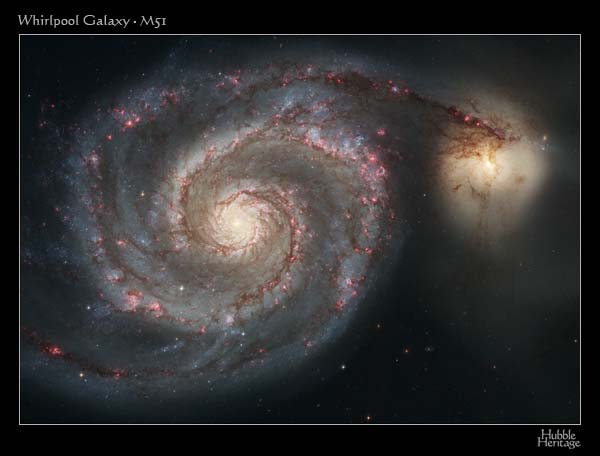
- Spiral Density Waves, Toomre Q, and Swing Amplification
- Magnetohydrodynamics (Ideal vs. Non-Ideal)
- Magneto-Rotational Instability
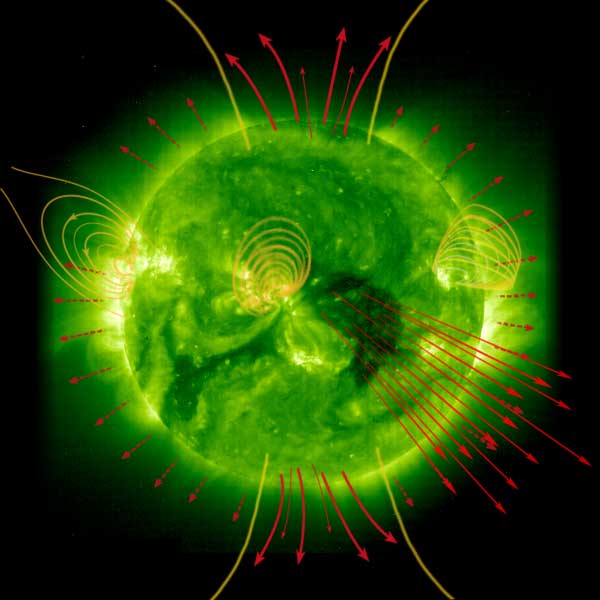
- Magnetized Winds (Solar Wind; Blandford–Payne; Magnetic Towers)
Texts
- Astro 202 Course Reader — on sale at Copy Central (1971 Shattuck Avenue)
- Physical Fluid Dynamics by Tritton (concise and readable; what I grew up with)
- Astrophysical Flows by Pringle and King
- Physics of Astrophysics: Gas Dynamics by Shu
- Elementary Fluid Dynamics by Acheson (concise and readable)
- An Introduction to Fluid Dynamics by Batchelor (standard reference, liked by many)
- Fluid Mechanics by White (friendly; for engineers)
- Fundamentals of Fluid Mechanics by Munson, Young, and Okiishi (very friendly; for engineers)
- Plasma Physics by Sturrock (selections are in the Course Reader)
- Physics of Shock Waves and High-Temperature Hydrodynamic Phenomena by Zel’dovich and Raizer (classic and readable)
- Modern Classical Physics by Blandford and Thorne (to read after the above)
- Fluid Mechanics by Landau and Lifshitz (to read after the above)
Movies
- In the 1960s, the National Committee for Fluid Mechanics Films, led by Ascher Shapiro of MIT, created a set of beautiful and highly entertaining films on fluid dynamics.
Format and Grading
- Weekly lectures
- Readings
- Problem sets (75%)
- Written final exam (25%)
- Semester grades: A− (90%) / B− (80%) / C− (70%) / D− (60%) / F (< 60%)
- One “average” homework will be dropped when computing your homework grade. In this scheme it is possible to score above 100% on the homework; grades exceeding 100% will be reset to 100%.
Readings
- Shu pp. 3–6; Tritton 5.1–5.5; White 4.2, 4.3, 4.5; Pringle & King §§1–1.4, 1.7.
- Pringle & King 1.3–1.4, 1.6.1, 1.7.1, 1.7.3; Shu pp. 20–24, 30–33, 49–50; Tritton 10.4–10.7; Landau & Lifshitz Chapter 1, §§5–6. Movies: e.g., Eulerian/Lagrangian, Fluid Quantity and Flow, Flow Visualization.
- Pringle & King 2.1.1 & 2.1.2; Tritton 5.8, chapters 2 and 8. Movies: Pressure Fields and Fluid Acceleration. Plus any text you like on the Taylor–Proudman Theorem (e.g., Acheson pp. 279–280).
- Tritton, chapter 3. Movies: Drag I and II. Plus readings from Acheson and Batchelor as pointed out in problem sets.
- Movies: Drag III, IV. Skim relevant pages on Drag in the Course Reader.
- Shu pp. 73–81; pp. 24–31 of Course Reader, photocopied from Frank, King, & Raine.
- Shu pp. 210–217, 230–240; however much of Thorne & Blandford Chapter 17 you like.
- Selections from Sturrock in the Course Reader.
- Shu pp. 302–310 on MHD waves and pp. 360–365 on ambipolar diffusion; however much of Weber & Davis (1967) and Blandford & Payne (1982) you care to read.
- Course Reader: selections from Binney & Tremaine. Also Shu pp. 98–101.
- Course Reader: (a) selections from Binney & Tremaine; (b) passages on accretion disks from Frank, King, & Raine; (c) however much of Gammie (2001) you like (the introduction is very readable). Also skim Shu pp. 82–88, 90–92.
- However much of the hand-outs by Balbus & Hawley you like; Shu pp. 93–98, 101–110, 120–123, 125–130.
Problem Sets (75%)
See bcourses.berkeley.edu for the up-to-date version.
If you use these problem sets for your classes, I would appreciate your letting me know by email and referencing this class and website.
Homework policy: You are encouraged to consult others and the instructor, but only after having thought seriously about the problem yourself. Your final solution should be written up by yourself. You may ask for short extensions in special circumstances.
- PS 1 — Due Wed Feb 5 (PDF)
- PS 2 — Due Wed Feb 12 (PDF)
- PS 3 — Due Wed Feb 19 (PDF)
- PS 4 — Due Wed Feb 26 (PDF)
- PS 5 — Due Wed Mar 4 (PDF)
- PS 6 — Due Wed Mar 11 (PDF)
- PS 7 — Due Wed Mar 18 (PDF)
- PS 8 — Due Wed Apr 1 (PDF)
- PS 9 — Due Wed Apr 8 (PDF)
- PS 10 — Due Wed Apr 15 (PDF)
- PS 11 — Due Wed Apr 22 (PDF)
- PS 12 — Due Fri May 1 (PDF)
Final Exam (25%)
Students may opt for written or oral exams.